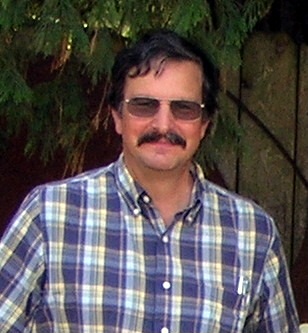
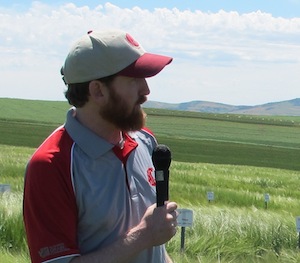
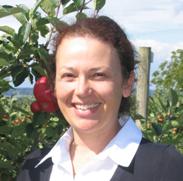
This presentation is part of the “How to Breed New Plant Varieties: Imagining and Engineering Crops” series and describes the breeding of stringless snap peas.
Dr. Myers has breeding programs on snap beans, snap peas, broccoli, tomatoes and cucurbits. His academic interests include breeding for disease resistance, enhanced human nutrition, and adaptation to organic production systems.
This presentation is part of the “How to Breed New Plant Varieties: Imagining and Engineering Crops” series and describes the breeding of cucurbit vine crops.
Part 1
Part 2
Full Recording
Original Broadcast Date: Tuesday, May 13, 2014
About the Webinar
Dr. Michael Mazourek from Cornell University will present a webinar on the breeding of cucurbit vine crops.
The overall theme of Dr. Mazourek’s program is innovation of vegetables for adaptation for production in the Northeastern US and to be of improved quality and nutrition for consumers.
Dr. Walter De Jong’s research centers around the genetic improvement of potato, both by conventional and molecular genetic means. Our breeding program aims to develop new chipping and tablestock varieties that are adapted to the Northeast and meet ever-changing needs of the regional potato industry.
Dr. Murphy leads the barley and alternative crop breeding program at WSU. Their goal is to increase the genetic- and bio-diversity of cropping systems across Washington State through the development of new cultivars and ecologically-rooted production practices.
Dr. Kate Evans from Washington State University will present a webinar on the breeding of apples describing apple breeding techniques new and old and also current practice in her program at WSU
Dr. Evans is experienced in all aspects of traditional apple and pear breeding techniques, including design and implementation of crossing programs, seedling selection including resistance to many diseases and selection for fruit quality.
Bean Genome, Schmutz et al. Nature Genetics (2014) doi:10.1038/ng.3008
About the Presenter
Dr. Kelly’s dry bean breeding and genetics program is focused on the development of high yielding, disease and stress resistant cultivars with upright architecture, and improved canning quality in 10 commercial seed classes for production in Michigan.
Dr. Crosby’s area of research is plant breeding and genetics of vegetable crops. He has worked on melon, pepper, tomato, onion and carrot. The main emphasis of his research has been the elucidation of genetic mechanisms for stress tolerance and enhanced nutritional quality.
Dr. Johnie Jenkins, Research Geneticist with the USDA-ARS in Starkville, MS, was honored with the 2013 NAPB Lifetime Achievement Award. Johnie joined ARS in 1961 and has made and continues to make significant contributions to the science of plant breeding. Dr. Jenkins has been recognized in many other venues during his career, including induction into the USDA Hall of Fame in 2007. Johnie has been a leader in developing interdisciplinary teams to research host plant resistance in cotton, an effort that has brought about reduction of damage by several insect pests and nematodes. He pioneered the understanding of the effects of chemical differences among cotton strains on the variability of damage done by pests and performed seminal work on cotton fruiting, retention, and yield, developing the technique of “plant mapping” that is used throughout the industry today. Dr. Jenkins’ research has benefited the global cotton community through his mentoring of 71 graduate students from 12 countries.
This webinar will discuss the challenges and approaches of breeding for a machine harvested, perennial fruit crop for a processing market – red raspberry. The major priorities for my breeding program are to develop virus resistant, root rot tolerant, machine harvestable raspberry cultivars with excellent fruit quality.
Patrick Moore was was hired by Washington State University in 1987 as the berry plant breeder working with red raspberry and strawberries. He works closely with growers, commodity commissions and the breeding programs in Oregon and British Columbia to develop new cultivars for the Pacific Northwest. Since he has been with Washington State University he has released seven red raspberry cultivars and three strawberry cultivars and has six plant patents with another pending.
Java needs to be installed and working on your computer to join the webinar. If you have concerns, please test your Java at http://java.com/en/download/testjava.jsp prior to joining the webinar. If you are running Mac OS with Safari, please be sure to test your Java. If it isn’t working, please try Firefox (http://www.mozilla.com) or Chrome (http://www.google.com/chrome). The webinar program will require you to download software before connecting you to the webinar, so if you don’t have administrative rights on your computer, you may not be able to do this, although you can listen in by phone. If you’d like to test your connection to gotowebinar in advance, go here
Dr. Murray’s research focuses on molecular quantitative genetics as well as applied maize breeding. He identifies and quantifies genetic effects in maize for tolerance and resistance to biotic and abiotic stresses along with introgression of exotic germplasm into adaptedsubtropical and temperate germplasm. Dr. Murray develops germplasm with improved grain quality, processing properties, and value-added traits. He uses QTL mapping, association mapping, and genomic selection to expedite the breeding process.
PBGworks 1890
Manage Cookie Consent
To provide the best experiences, we use technologies like cookies to store and/or access device information. Consenting to these technologies will allow us to process data such as browsing behavior or unique IDs on this site. Not consenting or withdrawing consent, may adversely affect certain features and functions.
Functional
Always active
The technical storage or access is strictly necessary for the legitimate purpose of enabling the use of a specific service explicitly requested by the subscriber or user, or for the sole purpose of carrying out the transmission of a communication over an electronic communications network.
Preferences
The technical storage or access is necessary for the legitimate purpose of storing preferences that are not requested by the subscriber or user.
Statistics
The technical storage or access that is used exclusively for statistical purposes.The technical storage or access that is used exclusively for anonymous statistical purposes. Without a subpoena, voluntary compliance on the part of your Internet Service Provider, or additional records from a third party, information stored or retrieved for this purpose alone cannot usually be used to identify you.
Marketing
The technical storage or access is required to create user profiles to send advertising, or to track the user on a website or across several websites for similar marketing purposes.